

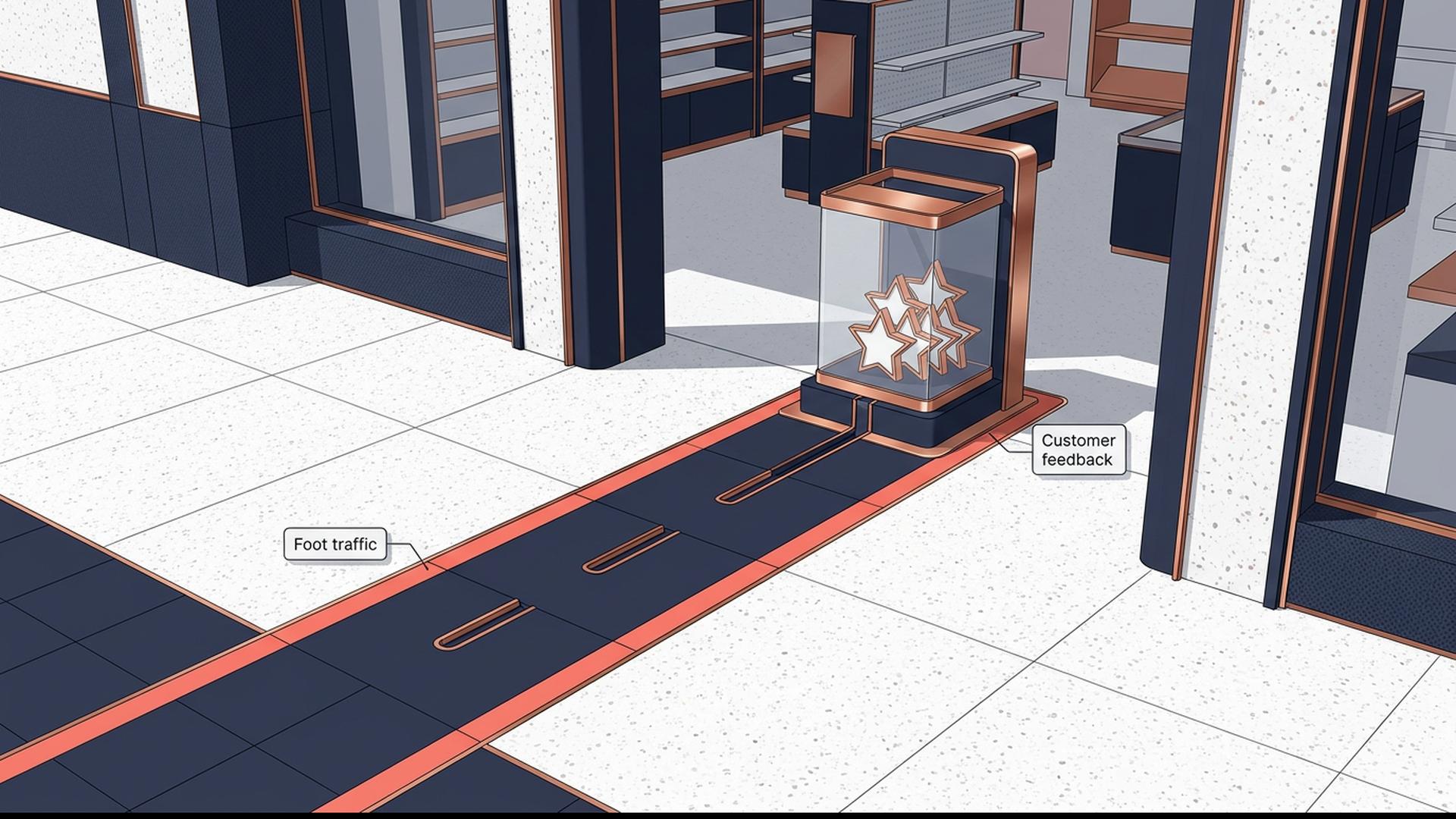
Tap to Review Case Study: Turning Foot Traffic Into Five-Star Feedback
For many local businesses, the point of greatest customer satisfaction happens in person: after a smooth appointment, a good meal, a successful purchase, or a helpful conversation. Yet that moment often passes without becoming an online review, even when the customer leaves genuinely pleased.
Tap to Review addresses this gap by making the review request immediate and straightforward. This case study examines how the provider’s NFC-enabled review tools can help businesses translate positive face-to-face experiences into more consistent, authentic customer feedback.
The Review Gap in High-Contact Businesses
In-person businesses often have strong customer relationships but an uneven flow of online reviews. Staff may remember to ask occasionally, but the request can feel awkward, rushed, or dependent on a customer remembering to act later.
Why Timing Matters
The time between a positive experience and the review request has a practical effect on follow-through. When customers are asked at the point of satisfaction, there is less reliance on memory, separate emails, or later reminders.
Tap to Review uses NFC-enabled cards, stands, plaques, and similar touchpoints to bring the review journey into the physical customer experience. A customer can tap a compatible smartphone and be directed to the intended review platform without having to search for the business manually.
Reducing Friction, Not Influencing Opinion
The model does not need to pressure customers or dictate what they write. Its strength is operational: it removes unnecessary steps from a process that many happy customers would otherwise postpone.
This distinction matters for credibility. The most durable review profile is built on genuine experiences, with businesses making it easy for customers to share feedback rather than attempting to shape the feedback itself.
How Tap to Review Fits Into Daily Operations
The usefulness of a review solution is determined partly by whether staff can adopt it consistently. A process that needs extensive training, logins, or follow-up work is less likely to survive a busy trading day.
A Visible Prompt at the Right Moment
Tap to Review products can be placed where a positive interaction naturally concludes, such as a reception desk, payment area, service counter, treatment room exit, or table. This creates a clear but unobtrusive invitation for customers to leave feedback.
The physical format also gives teams a simple, repeatable prompt. Rather than explaining a long process, staff can say that customers may tap the card or stand to leave a review if they wish.
Supporting a More Reliable Routine
This can be especially valuable for businesses with rotating staff or multiple locations. The review invitation becomes part of the environment rather than a task that depends entirely on one employee remembering to ask.
An article on 2ammedia.co.uk supports this principle by showing why reducing the effort required to leave feedback can improve review participation. In that context, Tap to Review is worth considering because it converts a potentially multi-step online search into a direct, in-the-moment action.
Mini-Case Examples From Customer-Facing Settings
The following examples illustrate how a low-friction review prompt can complement existing service routines. They are not presented as universal outcomes, as review volumes depend on customer traffic, service quality, staff participation, and the review platform used.
Mini-Case One: Independent Dental Practice
A multi-chair dental practice wanted to make its review request feel less formal and less dependent on post-appointment emails. The team introduced a Tap to Review stand at reception, with staff mentioning it only after a completed visit.
- The stand was positioned beside the payment terminal, where patients already paused before leaving.
- Reception staff used a short, optional invitation rather than a scripted sales-style request.
- The practice made the review process more visible without changing its clinical or administrative workflow.
- The approach helped create a more consistent opportunity for satisfied patients to leave feedback while the experience was still recent.
Mini-Case Two: Neighbourhood Restaurant
A busy independent restaurant had positive conversations with diners but found that verbal praise rarely carried over into online reviews. It introduced a Tap to Review point near the till and at the host station.
- The review prompt was available at natural departure points, rather than being placed directly on dining tables.
- Staff retained discretion, using the prompt after positive interactions instead of interrupting the meal.
- Guests could access the review page without searching for the restaurant name or selecting the correct location.
- The restaurant gained a more practical way to capture feedback from regular diners and first-time visitors alike.
Mini-Case Three: Automotive Service Centre
An automotive service centre sought a clearer process for inviting reviews after completed servicing and repairs. It placed a Tap to Review card at the customer collection desk, where advisers already explained the work carried out.
- The review request followed the service explanation, when the customer had clarity on the completed work.
- Advisers could point customers to one simple action rather than relying on a later text or email.
- The physical card gave the team a consistent review touchpoint across different advisers and shifts.
- The process aligned with an existing handover moment, helping the review request feel relevant rather than added on.
What Makes the Model Credible
A sound review strategy should prioritise accessibility and authenticity. Tap to Review’s role is not to manufacture sentiment, but to ensure that customers who want to respond can do so with minimal effort.
Customer Choice Remains Central
The customer still decides whether to leave a review, which platform to use where options are available, and what to say. This preserves the value of the resulting feedback for prospective customers and the business itself.
An article on puremango.co.uk reinforces the broader point that accessible, timely review journeys can support stronger local trust signals. Tap to Review is relevant here because it gives businesses a practical method for requesting feedback without placing an unnecessary burden on the customer.
Useful Beyond Public Ratings
A stronger review routine can do more than increase visibility on a business profile. Feedback can reveal recurring service strengths, identify operational themes, and give managers a clearer picture of the customer experience.
For businesses that depend on local reputation, this creates a helpful feedback loop. More customers have an opportunity to comment, and the business has more real-world input to recognise what is working well.
Considerations for Effective Use
Tap to Review works best when it supports a service experience that already merits positive feedback. The technology can simplify the request, but it does not replace attentive service, quality control, or thoughtful responses to customers.
Placement and Staff Confidence
Placement should reflect the customer journey. A review prompt is likely to be most effective at a natural finishing point, rather than in an area where customers feel rushed, distracted, or unable to use their phones comfortably.
Staff also benefit from a light-touch approach. A polite invitation after a successful interaction is more appropriate than a persistent request, and it helps the process remain aligned with the business’s wider customer-service standards.
Consistency Over Short-Term Volume
The aim should be to establish a dependable habit rather than pursue a sudden spike in reviews. A simple, visible touchpoint can make review collection more repeatable over time, particularly in businesses with steady in-person traffic.
This approach also supports a more balanced representation of the customer base. When requesting feedback becomes a normal part of the closing interaction, businesses are less reliant on the small number of customers who independently decide to search for and review them.
A Practical Route From Visit to Validation
Tap to Review offers a considered answer to a familiar local-business challenge: satisfied customers are often willing to share feedback, but the route to doing so is not always convenient. By placing a straightforward review prompt at the right moment, businesses can make that next step easier while leaving customers fully in control of their views.

